




Introduction
How Tash & Tasha streamlined table ordering, mobile payments, and kitchen coordination across 35 tables — while keeping full-service dining intact.
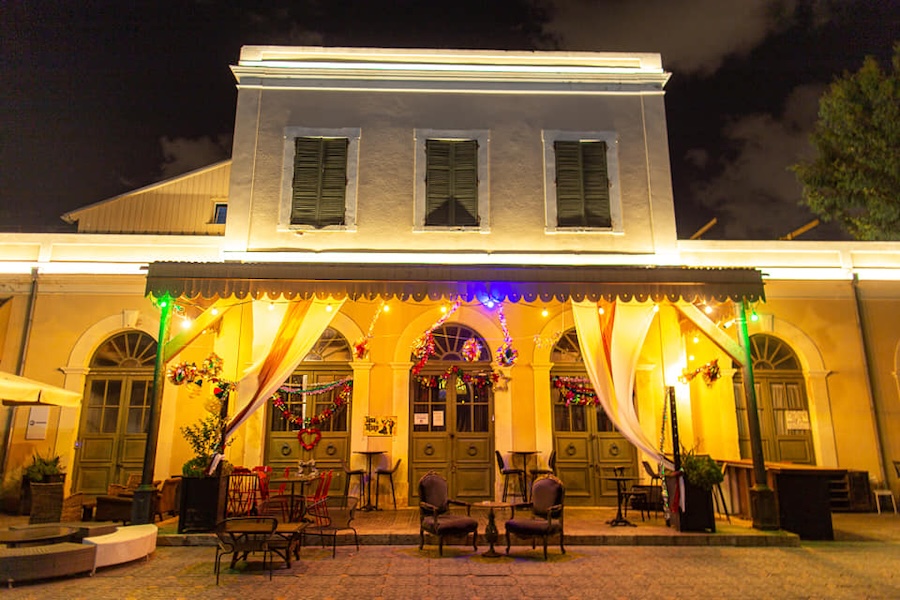
Tash & Tasha is a full-service restaurant with both indoor seating and a terrace, operating across 35 tables and managing multiple preparation stations — including separate hot and cold kitchens alongside a bar.
During peak hours, coordinating orders across these stations while maintaining smooth table service can quickly become complex. Staff need to take orders, enter them into the POS, communicate with the kitchen, and handle payments — all while keeping the guest experience warm and attentive.
To simplify this flow, Tash & Tasha introduced Gravy’s QR ordering alongside its traditional table service model. Guests can browse the menu, place orders, and complete payments directly from their phones, while staff remain focused on hospitality and service.
The result is a hybrid operational setup where service becomes faster and more predictable without changing the core dining experience.
The Challenge
Like many full-service restaurants, Tash & Tasha felt the biggest pressure during busy hours.
Ordering created the first bottleneck. Guests often had to wait for a waiter to arrive, take the order, and manually enter it into the POS. That added friction at exactly the moment when speed mattered most.
At the same time, the restaurant had to coordinate orders across multiple preparation stations — hot kitchen, cold kitchen, and bar. When information moved through staff instead of directly through the system, the risk of delays, missed items, and timing issues naturally increased.
Payments created another layer of pressure. In a full restaurant, guests often had to wait again at the end of the meal just to settle the bill, which slowed table turnover and added more strain to the floor team.
To keep service quality high, the restaurant needed more waiters on the floor than ideal. The real problem was not hospitality itself — it was how much staff time was being consumed by repetitive ordering and payment steps.
The Gravy Setup
Tash & Tasha implemented Gravy’s QR Menu across all tables while keeping its full-service model intact.
Each table is equipped with a QR code that gives guests immediate access to the menu. From there, they can browse, place orders, and, if they choose, complete payment directly from their phones.
Behind the scenes, Gravy is fully connected through POS integration, so orders move into the restaurant’s POS system without manual entry.
Orders are transmitted in real time and automatically routed to the correct preparation station — whether it’s the hot kitchen, cold kitchen, or bar. This kind of order routing ensures that every item reaches the right station immediately, and kitchen and bar tickets are printed without delay.
The menu also stays aligned through real-time menu updates, helping the restaurant keep pricing and availability accurate throughout service.
This setup changed the role of the floor team. Staff still greet guests, serve dishes, answer questions, and create the dining experience — but they no longer need to manually handle every order and payment step.
How It Works in Practice
- Guests arrive and are seated as usual by the staff
- They scan the QR code on the table to open the digital menu
- Guests browse items and place their orders directly from their phone
- Orders are instantly sent to the POS system
- Each item is automatically routed to the correct station (hot kitchen, cold kitchen, or bar)
- Kitchen and bar tickets are printed immediately
- Guests can continue ordering or complete payment directly from their device
- Staff focus on service, delivery, and guest interaction rather than repetitive order entry
What Changed
The biggest shift was how guests placed their orders. Around 85% of table orders now go through Gravy, which means most guests no longer need to wait for staff just to begin ordering. During busy hours, that alone makes service noticeably faster and smoother.
Payment behavior changed as well. About 55% of payments are now completed directly on mobile, reducing the usual delay at the end of the meal. Instead of waiting for the bill and card processing, many guests simply pay when they are ready and move on.
The operational impact is just as important. Because far fewer orders and payments need to be handled manually, Tash & Tasha can run peak service with a leaner team. In practice, the restaurant achieved a 50% reduction in floor staff needed during busy periods — operating with two waiters instead of four while still serving a full restaurant.
Accuracy improved at the same time. Orders go straight from guest input into the POS and are automatically routed to the correct station, whether that is the hot kitchen, cold kitchen, or bar. That removes many of the small mistakes and delays that usually happen when staff must carry information manually between tables and preparation areas.
For guests, the experience feels faster and more convenient. For the team, peak hours feel more controlled, less stressful, and much easier to manage.
“With Gravy, ordering and payment became much simpler for both guests and staff. Orders go straight into our POS and kitchen without delays, and even during busy hours everything stays smooth and accurate. On top of that, the support is warm, patient, and truly reliable.”
Mickey Mirell, Restaurant Owner
Why This Setup Worked
This setup works because it improves table service without trying to replace it.
Guests still enjoy the full restaurant experience — seating, interaction, and attentive service — but they also get the freedom to order and pay on their own terms. In practice, many guests are happy to use that option, especially when the venue is busy and speed matters more.
The direct connection to the POS system is what makes the model reliable. Orders are processed instantly and routed correctly every time, which is critical in a restaurant with separate hot and cold kitchens plus a bar.
At the same time, removing manual steps from the workflow gives the staff more room to focus on hospitality instead of administration. That is why the setup helps both sides at once: guests get a faster, more convenient experience, and the restaurant gains a more scalable operating model for peak hours.
Who This Use Case Is Best For
This setup is particularly effective for:
- full-service restaurants with high table volume
- venues with multiple preparation stations such as kitchen sections and bar
- restaurants experiencing peak-hour service bottlenecks
- businesses looking to reduce staffing pressure without compromising service
- restaurants that want to modernize operations while keeping a traditional dining experience
To explore more operational examples like this one, browse all Gravy use cases.

