




Introduction
How a full-service restaurant runs dine-in and takeaway in parallel — with one POS-connected ordering flow.
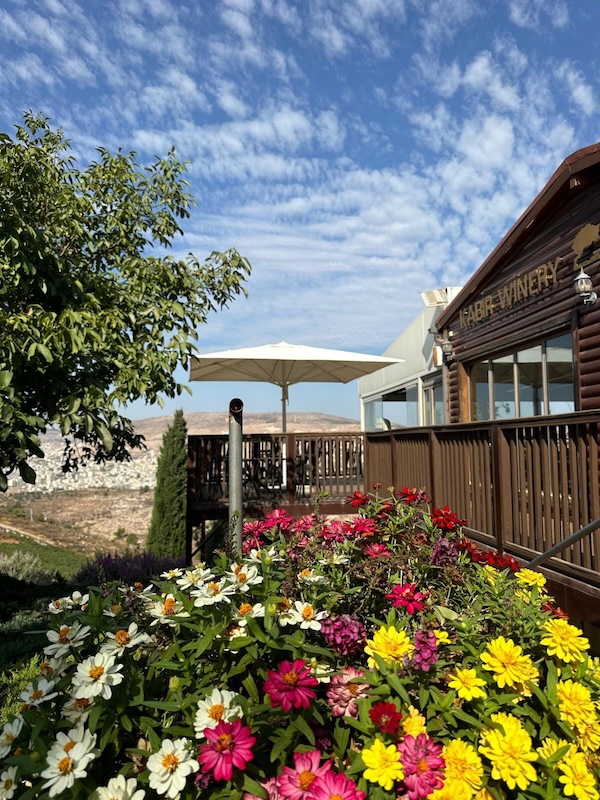
Kabir Winery is a full-service restaurant combining traditional table service with active takeaway traffic. With around 30 tables split between indoor seating and a terrace, the venue operates in a dynamic environment where multiple service flows run at the same time.
To manage both dine-in and takeaway efficiently, Kabir Winery implemented Gravy as a unified ordering layer. Guests can scan, browse, and order directly from their phones, while orders are instantly routed into the POS and distributed across kitchen and bar stations.
This created a hybrid service model where table service and takeaway operate in parallel — without adding operational chaos behind the scenes.
About the Venue
Kabir Winery operates as a full-service restaurant with a dual service model:
- table service with waitstaff across indoor and terrace seating
- takeaway and counter-based orders running in parallel
The venue includes separate preparation areas for hot kitchen, cold kitchen, and bar service, requiring precise order routing and coordination.
During peak hours, both dine-in and takeaway demand increase simultaneously, putting pressure on staff, kitchen timing, and overall service flow.
The Challenge
Before implementing Gravy, Kabir Winery had to manage two service models at the same time: traditional table service and active takeaway demand.
During peak hours, both flows accelerated together. Seated guests expected attentive service at the table, while takeaway customers needed fast ordering, guest validation, and payment at the counter flow. That created constant pressure on staff, who had to split attention between hospitality, order-taking, POS entry, and coordination with the kitchen and bar.
Manual order entry made the situation harder. Every extra step slowed service, increased staff load, and made it more difficult to keep both dine-in and takeaway moving smoothly at the same time.
The venue also needed different ordering and payment logic for different contexts. Table-service guests could order with optional payment in the flow, while takeaway orders required guest validation and payment during checkout. Managing those differences consistently without breaking operational rhythm was a real challenge.
On top of that, all orders still had to reach the correct preparation points — kitchen, bar, and service team — without confusion or delay. The restaurant needed one operational model that could support both dine-in and takeaway together, without creating friction between them.
The Gravy Setup
Kabir Winery implemented a hybrid ordering setup using Gravy:
- QR Menu for table service
- QR Kiosk for takeaway flow
- full POS integration
- automatic order routing across kitchen and bar
- separate menus for dine-in and takeaway scenarios
- flexible payment logic depending on service type
Guests at tables can order with or without immediate payment, while takeaway orders require validation and payment within the flow.
How It Works in Practice
- Guests scan a QR code depending on their context (table or takeaway)
- They access the relevant menu (dine-in or takeaway)
- They place an order directly from their phone
- Payment is handled according to the service type
- Orders are instantly sent to the POS
- Orders are automatically routed to the correct kitchen or bar station
- Staff focus on service and delivery rather than order entry
This creates a unified operational flow across multiple service formats.
What Changed
After implementing Gravy, Kabir Winery saw measurable improvements across both dine-in and takeaway operations:
- 95% of all orders now flow through the platform
- 60% fewer staff needed during peak hours
- 20% faster table turnover
The biggest operational shift came during peak hours. Because guests place most orders directly from their phones, staff no longer handle the same volume of repetitive order-taking and POS entry.
As a result, dine-in and takeaway flows no longer compete for staff attention. Both run through the same POS-connected structure, with the right menu, payment logic, and routing behavior applied to each scenario.
Kitchen and bar coordination also became more predictable. Orders arrive faster, cleaner, and with less manual handling — making busy periods easier to manage for the team.
The result is a more balanced operation, where dine-in and takeaway can scale together without pulling the restaurant in two different directions.
“Three years ago, we discovered Gravy’s digital menu — and it completely transformed how we handle orders. Guests simply scan, browse, and order on their phones. Orders go straight to the kitchen, service is faster, and our waiters have more time to focus on real hospitality instead of taking orders. The system is intuitive, efficient, and incredibly convenient for both staff and guests. Gravy is truly impressive — and absolutely worth it.”
— Eitan Naveh, Head Chef
Why This Setup Works
This setup works because it brings two different service models into one operational structure.
Table service and takeaway follow different guest journeys, payment rules, and timing expectations. Gravy allows both to run through the same POS-connected system without forcing the restaurant into separate tools or disconnected workflows.
- One platform supports both dine-in and takeaway flows
- POS integration keeps all orders consistent and centralized
- Routing logic adapts to kitchen, bar, and service needs
- Guests interact with a simple, unified ordering experience
- Staff workload is reduced without losing operational control
Instead of creating tension between dine-in and takeaway, both flows run side by side in a more controlled and scalable way.
Who This Use Case Is Best For
This model is ideal for:
- restaurants combining table service and takeaway
- venues with terrace + indoor seating
- locations with multiple preparation zones (kitchen + bar)
- busy restaurants with overlapping peak demand
- operators looking to scale without increasing staff
If your venue runs multiple service formats at once, a unified QR ordering system can simplify operations and improve performance across the board.
Explore more real-world scenarios in our Use Cases section.


