




Introduction
How a café-patisserie reduces queues, speeds up takeaway service, and increases average check — without adding staff.
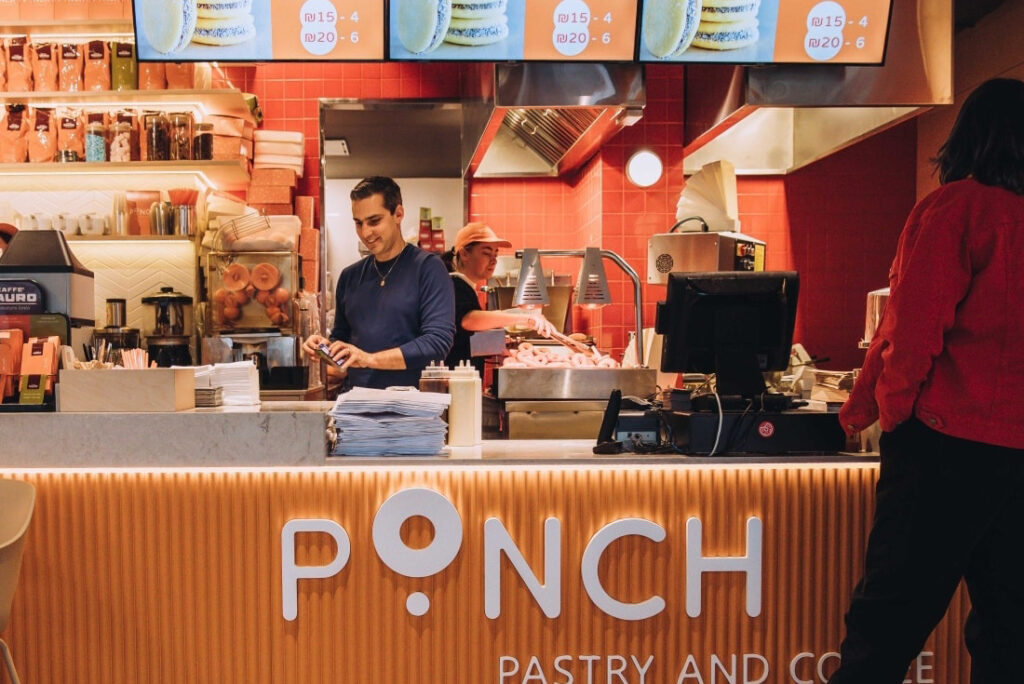
Ponch is a café-patisserie in Ashdod built around a fast takeaway model, with a smaller dine-in area of around 10 tables. The venue combines specialty pastries, desserts, and coffee with a high-volume service flow that needs to stay quick and efficient throughout the day.
To reduce queue pressure and speed up takeaway service, Ponch introduced Gravy’s QR ordering flow as a self-service layer for takeaway guests. Guests can scan, place their order, and pay directly from their phones, while orders go straight into the POS and on to the kitchen.
This effectively created a second ordering lane alongside the cashiers — helping the café serve more guests during peak periods without adding more staff.
About the Venue
Ponch operates as a takeaway-first café with a small dine-in option, serving guests both at the counter and across a limited number of tables inside and outside the venue. The concept is built around fast service, high product turnover, and consistent quality.
Like many cafés in this category, most orders traditionally go through cashiers, especially during peak hours. This creates natural pressure points when queues build up and every order must be processed manually by staff.
With growing demand and busy rush periods, maintaining speed without increasing staff became a key operational challenge.
The Challenge
Before implementing Gravy, takeaway ordering at Ponch depended almost entirely on cashier flow. During busy hours, this created a clear bottleneck:
- queues forming at the counter
- slower order throughput at peak times
- high dependency on staff for every transaction
- limited time for upselling during rushed interactions
- ongoing costs and maintenance of printed menus
The team needed a way to increase ordering capacity without adding more staff or disrupting the existing workflow.
The Gravy Setup
Ponch introduced QR Kiosk ordering as a self-service layer for takeaway guests.
The setup included:
- QR codes placed at the counter and across the venue
- mobile ordering and payment directly from guests’ phones
- full POS integration for automatic order sync
- instant order routing to kitchen stations
- real-time menu updates without reprinting
Cashiers remained part of the flow, but a meaningful share of demand shifted into the QR ordering channel, reducing pressure on the counter.
How It Works in Practice
- Guests arrive and scan the QR code at the counter or seating area
- They browse the digital menu on their phone
- They place their order and pay directly in the flow
- The order is instantly sent into the POS
- The kitchen receives the order automatically
- Staff prepare the order for takeaway pickup
- Cashiers handle fewer transactions, reducing queue load
This creates parallel ordering flows — one through staff and one through self-service — improving overall throughput without changing the core service model.
What Changed
After implementing Gravy, Ponch saw measurable improvements across speed, efficiency, and revenue:
- 22% of takeaway orders now go through QR ordering
- 30% faster queue flow during peak hours
- 8% higher average check compared to cashier orders
In addition:
- printed menus were fully eliminated
- orders reach the POS and kitchen faster and more accurately
- staff workload during rush hours is significantly reduced
- more guests are served without increasing team size
The result is a smoother and more scalable takeaway operation.
“Since launching Gravy at Ponch, we’ve reduced printing costs and completely eliminated the need for physical menus. Takeaway orders flow faster, queues are shorter, and peak hours feel much more manageable. Orders go straight into our POS and to the kitchen, keeping everything smooth and accurate. Most importantly, we’re serving more guests in less time — without adding more staff.”
— Alisa Shilin, Operations Manager
Why This Setup Worked
This setup works particularly well because it aligns with how takeaway guests behave — prioritizing speed, simplicity, and control over their ordering experience.
- QR ordering adds capacity without adding hardware or staff
- POS-connected flow ensures accuracy and consistency
- mobile ordering reduces reliance on cashier availability
- guided ordering increases average check naturally
- digital menus eliminate operational overhead
Instead of replacing staff, the system supports them — making peak hours easier to manage.
Who This Use Case Is Best For
This model is especially effective for:
- takeaway-focused cafés and bakeries
- coffee shops with peak-hour queues
- venues with limited cashier capacity
- locations combining takeaway and light dine-in
- operators looking to increase throughput without hiring more staff
If your venue experiences queue pressure during busy hours, this type of QR ordering setup can significantly improve both speed and customer experience.
Explore more real-world scenarios in our Use Cases section.

