



Digital menus do much more than replace printed menus. In many restaurants, the menu is still one of the biggest sources of friction — slowing down ordering, limiting visibility, and quietly reducing revenue.
A well-designed digital menu can address these issues directly. It lowers update costs, speeds up ordering, supports upselling, and creates a better guest experience from the first interaction.
In practice, menu-related friction often goes unnoticed. It shows up in slower decisions, limited item visibility, difficult updates, and missed opportunities to guide the ordering flow.
That is why more restaurants are moving to digital menus — not because they look modern, but because they help improve operations, increase revenue, and make service feel smoother for both guests and staff.
What a Digital Menu Really Changes
A digital menu is more than a screen version of a printed one. It is an interactive ordering interface that allows guests to browse, explore, and in many cases order directly through their own phone, a table device, or a self-service station.
The key difference is that digital menus are dynamic. They can change instantly, reflect real-time availability, guide guests through modifiers, and connect directly to the restaurant’s POS workflow.
That shift turns the menu from a passive information layer into a tool that supports speed, consistency, and sales performance.
Lower Operating Costs Without Sacrificing Service
One of the clearest benefits of digital menus is lower operating overhead.
Printed menus have to be redesigned, reprinted, and replaced whenever prices change, seasonal items rotate, or out-of-stock dishes need to be removed. For restaurants with frequent updates, that creates recurring inefficiency and unnecessary expense.
Digital menus remove most of that overhead. Items, prices, descriptions, and availability can be updated centrally through real-time menu management, without reprinting and without waiting for the next physical revision cycle.
That matters even more in restaurants where menus change often, promotions rotate regularly, or availability shifts throughout the day.
There is also a labor-side benefit. When guests can browse more clearly and place orders with less staff assistance, restaurants reduce pressure on front-of-house teams. That does not mean replacing people. It means letting staff spend less time repeating menu details and more time focusing on service, support, and operations.
How Digital Menus Help Increase Revenue
Lower costs matter, but revenue impact is often where digital menus create the most visible business value.
The first reason is visibility. A digital menu can present items more clearly, organize categories better, and make high-margin products easier to discover. Guests are more likely to notice upgrades, extras, and combinations when the interface guides them naturally instead of leaving everything buried in a printed layout.
The second reason is structured upselling. A digital interface can consistently suggest modifiers, premium options, combos, and relevant extras through built-in add-ons and upsells. Unlike busy staff, the system does not forget, skip, or rush through these moments.
The third reason is speed. The easier it is for a guest to browse and decide, the easier it is for the restaurant to serve more orders without adding unnecessary complexity. Faster ordering does not just improve convenience. It can directly affect throughput, especially during peak hours.
In practical terms, digital menus help restaurants generate more value from the same flow of demand. Even small improvements in average order value or ordering speed can have a meaningful impact over time.
Why Guests Often Prefer Digital Menus
Restaurants often think about digital menus from an operational perspective. But guests feel the difference too.
In practice, guests notice this in a few simple but meaningful ways:
- less waiting to browse or order
- clearer item descriptions and modifiers
- easier navigation across categories
- more control over the ordering process
- a smoother path from selection to checkout
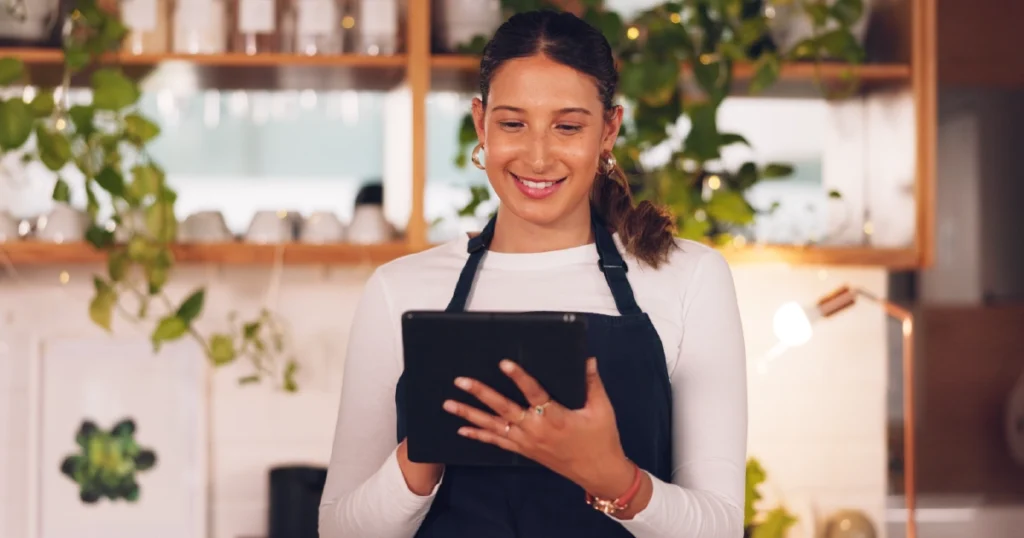
For seated service, a QR menu can reduce the delay between sitting down and placing the first order. For in-venue browsing, a tablet menu can provide a more guided and visually controlled experience. For takeaway and high-traffic environments, self-service formats such as QR kiosks or dedicated kiosk devices can make ordering faster and less dependent on a single counter line.
The key point is not that every restaurant should use the same format. It is that digital menus make it easier to match the ordering experience to the service model.
Better Experience for Staff, Not Just Guests
Digital menus also improve the experience on the staff side.
When guests browse more independently, ask fewer repetitive questions, and submit cleaner orders, staff deal with less confusion and less avoidable operational drag. Teams spend less time explaining basic menu structure and less time correcting preventable ordering mistakes.
This becomes even more valuable when the menu is connected to the POS. Orders move through a more consistent system, fewer handoffs are needed, and the gap between what the guest selected and what the kitchen receives becomes smaller.
In other words, the menu stops creating extra work in the background.
Where Digital Menus Create the Most Value
Digital menus can work across many restaurant formats, but they create especially strong value where one or more of these conditions exist:
- the menu changes often
- the restaurant wants to reduce printing and update costs
- upselling opportunities are currently inconsistent
- staff are overloaded during busy hours
- guests wait too long to browse, order, or reorder
- the restaurant wants tighter coordination between menu, ordering, and operations
That is why digital menus are now common not only in quick-service environments, but also in casual dining, takeaway-heavy venues, food courts, and hybrid service models.
Digital Menus Work Best as Part of a Bigger System
A digital menu delivers the most value when it is not treated as a standalone tool.
On its own, it can still improve presentation. But when it is connected to ordering logic, upselling flows, payments, and the POS, it starts improving the business more broadly.
On its own, it improves presentation. As part of a connected system, it improves the business.
That is where digital menus become part of a larger operating model that may include:
- QR ordering at the table
- tablet-based in-venue browsing and ordering
- self-service ordering points
- POS-connected order processing
- built-in upselling logic
Once those parts work together, the menu no longer sits at the edge of the operation. It becomes a tool that helps shape service speed, guest flow, and sales performance.
Conclusion
The menu is no longer just a way to present dishes. It is part of the system that shapes ordering speed, guest flow, and sales performance.
Digital menus help restaurants reduce friction, keep menus accurate, improve upselling, and create a smoother experience for both guests and staff.
When connected to ordering, payments, and POS workflows, they stop being a static interface and become an active tool for running a more efficient and profitable restaurant.
And for many restaurants, that shift is already underway.
Want to see how digital menus work in real restaurant operations?
Explore how QR menus, tablets, and kiosks can help you reduce friction and improve performance.