
Table Ordering Integrations for Restaurants

Explore integrations that support table ordering with Gravy. This page shows which POS systems and platforms enable connected dine-in ordering through QR menus and tablet-based ordering.

Orders placed through QR Menu and Tablet Menu are routed into POS systems, synchronized with menus and item availability, and sent directly to kitchen and service workflows.

Unlike a general overview of table ordering, this page focuses on integrations that already support connected dine-in ordering in real restaurant environments, including POS platforms and operational systems.

Syrve POS integration with Gravy
POS Systems

Syrve POS Integration

Add QR menus, tablet ordering, and kiosks to Syrve POS while keeping orders, menus, and item availability automatically synchronized.
Gravy integrates with Syrve POS to bring modern digital ordering channels directly into the restaurant’s existing operational workflow. Restaurants can add QR menus, tablet ordering, and self-service kiosks without changing how Syrve manages tables, orders, and payments.
POS sync Real-time menu Kitchen routing Payments supported
Aviv POS integration with Gravy
POS Systems

Aviv POS Integration

Connect Gravy with Aviv POS to enable QR, tablet, and self-service ordering while orders, tables, and payments remain fully managed inside the POS.
Gravy integrates with Aviv POS to extend the system with modern digital ordering channels such as QR Menu, Tablet Menu, and Tablet Kiosk.
iiko POS integration with Gravy
POS Systems

iiko POS Integration

Connect Gravy to iiko POS to launch QR Menu, Tablet Menu, QR Kiosk, and Tablet Kiosk with synchronized orders, menus, and item availability.
Gravy integrates with iiko POS to add digital ordering channels while keeping restaurant operations managed inside the POS. Orders placed through QR Menu, QR Kiosk, Tablet Menu, and Tablet Kiosk are automatically sent to iiko, where they appear as regular POS orders.

What Supported Table Ordering Integrations Enable

Table ordering integrations connect dine-in ordering flows with the systems restaurants already use to manage tables, menus, and operations.

Depending on the integration, guests can browse menus and place orders directly from the table using QR menus or tablet-based ordering, while orders, payments, and service workflows stay connected to POS systems.

This turns table ordering into a structured operational process instead of a disconnected digital layer.

To learn more about how system connectivity works, visit our POS Integration feature page.

Why Table Ordering Integrations Matter

Connected Dine-In Flow

Orders placed at the table move directly into restaurant systems instead of relying on manual input from staff.

POS terminal integrated with ordering system for table orders

Reduced Wait Times

Guests can order and reorder without waiting for staff, improving service speed during peak hours.

Real-Time Menu Accuracy

Menus, pricing, and item availability stay synchronized between ordering interfaces and POS systems.

Better Staff Efficiency

Staff can focus on service and fulfillment instead of manually taking and entering orders.

Integrated Payments

Payments are processed within connected systems, simplifying checkout and reducing operational friction.

How Table Ordering Works Across Integrations

1.
Table Access

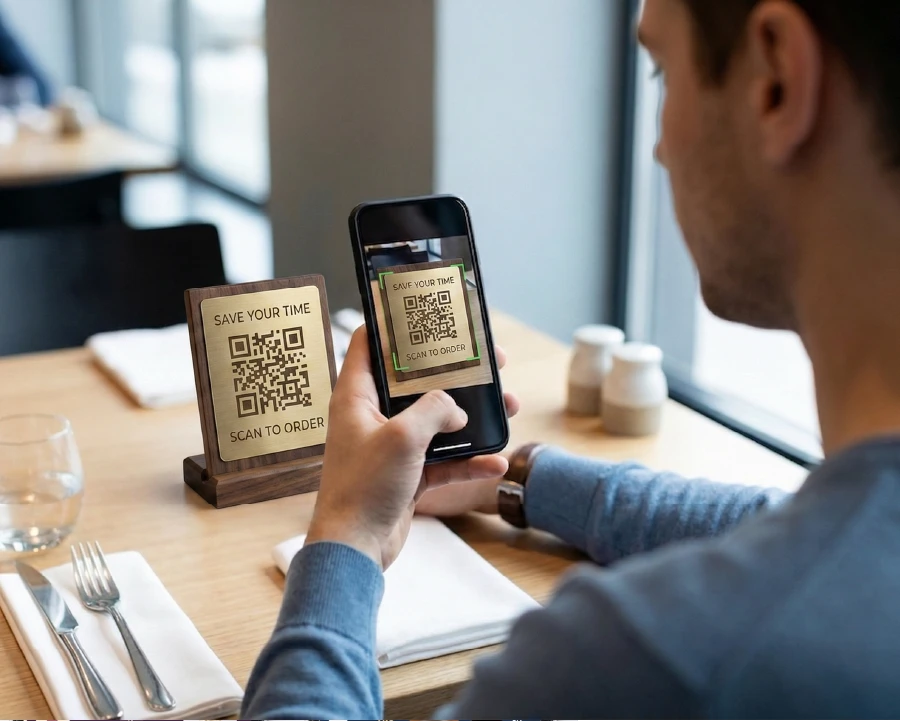
Guests access the menu by scanning a QR code or using a tablet device placed at the table.

2.
Menu Sync & Selection

Menus, pricing, and availability are synchronized from the POS or back-office system, allowing guests to browse and customize orders.

3.
Order Routing

Orders are sent directly into the POS and routed to kitchen and service workflow without manual input.

4.
Service & Payment

Orders are served and payments are processed through integrated systems, depending on the restaurant setup.

Connected Table Ordering, Not Just a Product Feature

This page is not a general overview of table ordering as a product capability — it shows which POS systems and platforms already support connected dine-in ordering workflows with Gravy.

If you want to explore the guest-facing ordering formats, see our QR Menu and Tablet Menu solutions.

For a broader look at how systems work together, visit the POS Integration feature page.

QR ordering system for busy table service restaurant

Don’t See Your POS or Platform?

We’re continuously expanding our integration ecosystem. If your POS or platform is not listed, our team can help you evaluate compatibility and explore integration options.

FAQ

Table ordering allows guests to browse menus and place orders directly from their table using digital interfaces such as QR menus or tablets.

Most production-ready table ordering setups rely on POS integration to synchronize menus, process orders, and manage dine-in operations efficiently.

It depends on whether your POS system supports integration. This page lists platforms that already support table ordering with Gravy.

Orders are typically sent directly into the POS and routed to kitchen stations, printers, or KDS workflows without manual input from staff.

Table ordering can be enabled through QR codes accessed on guest devices or through tablets installed at the table, depending on the restaurant setup.
Powered by Gravy digital ordering
Restaurant ordering products for QR menus, tablet ordering, and self-service kiosks on one POS-connected platform

Make Table Ordering Work Within Your POS Setup

Connect dine-in ordering flows to your POS, payments, and kitchen operations to deliver faster and more efficient table service.

Reduce manual work, improve order accuracy, and create a smoother guest experience during busy service periods.